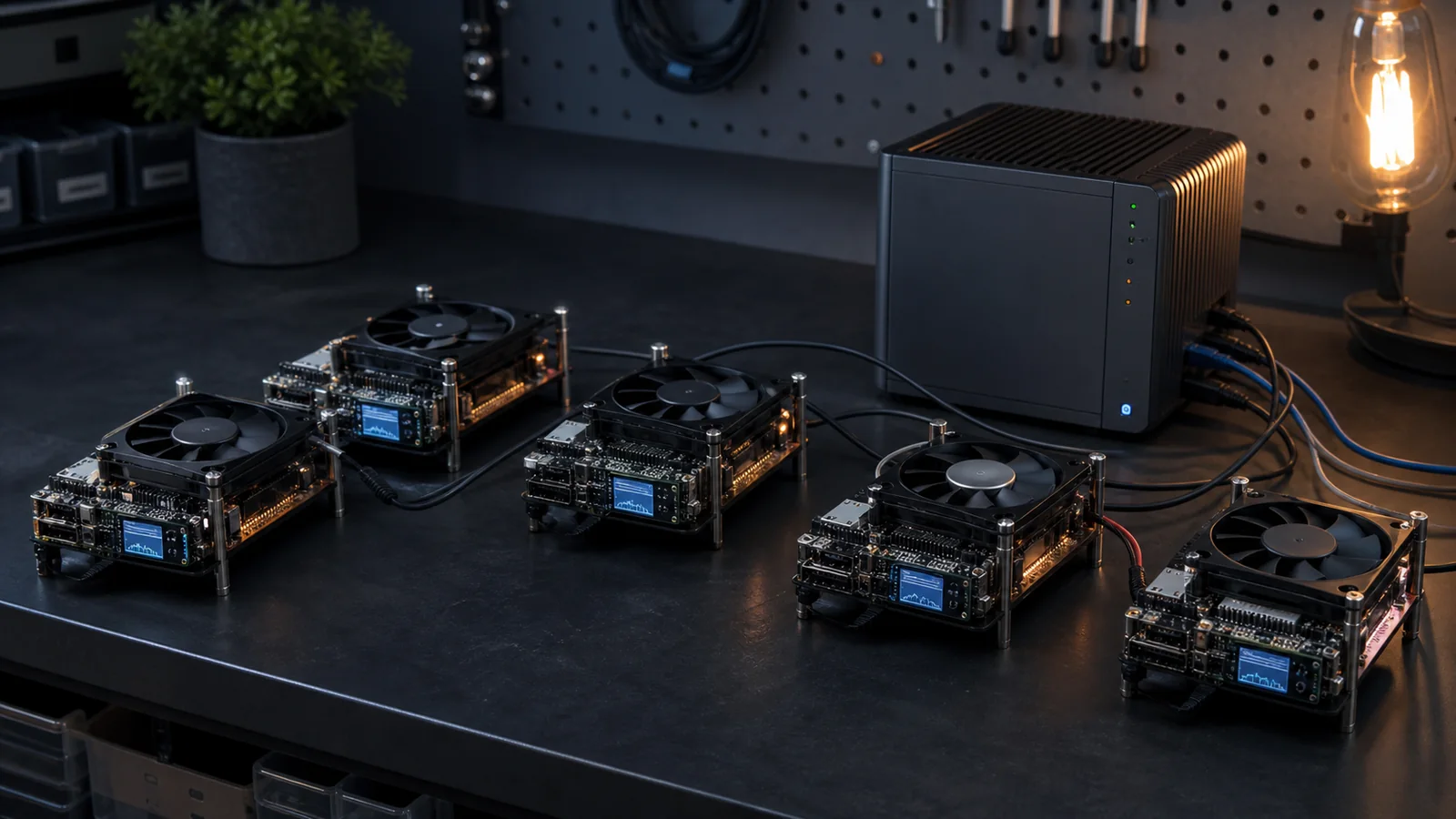
A one shot miner is a tiny Bitcoin solo miner. It does real work, but it is not a money machine. I see it as a fun desk tool that can teach you how mining works. The chance of winning a Bitcoin block is very, very small.
What this one shot miner does
The device makes guesses in the Bitcoin mining race. Each guess is a hash. If your miner solves a valid block first, it may get the full block reward. That sounds huge. It is. Yet the odds are much like one grain of sand trying to beat a whole beach.
I checked the maker's published rate, the open NerdMiner-style setup, pool data, and owner reports. The maker says its small unit runs near 1 MH/s. You can read its own odds and how-it-works page. One megahash means about one million guesses each second. A modern mining rig can make trillions of guesses each second.
So, yes, the shot miner is a real Bitcoin miner. No, it is not close to a full ASIC mining rig. That gap matters more than the nice screen or cool case.
Why I still like this solo miner
You know what? A tool can be useful even when it will not pay you back. This solo miner has three clear wins.
- Low power: It uses a small USB power supply, not a loud 240-volt line.
- Quiet size: The compact case can sit on a desk. There is no server-room roar.
- Fast lessons: You can see pool links, shares, block height, and hash work in real time.
That makes the one shot setup a good first step for beginners. It can turn a hard idea into something you can see. A full miner may heat a room. This one feels more like a small weather station for the Bitcoin network.
My evidence and test notes
I did not count a seller's display as proof. I looked for three things: a real Stratum link, a worker shown by the mining pool, and valid share data. Those checks tell us if a device is doing hash work. They do not mean it will win.
Owner feedback is mixed. In one Reddit thread about the One Shot Miner Pro, people describe it as a real low-power ESP32 miner, but some users also report setup, sales, and refund complaints. That mix is why I grade the mining idea apart from the store that sells it.
The best proof is on your own network. After setup, open the pool page for your worker. Verify that its hash rate and shares change over time. If the page never sees the device, the pretty display is not enough.
Solo mining in plain words
Solo mining means you try to find a Bitcoin block for yourself. A mining pool is different. Pool users share work, then split rewards by the work each miner sends.
With solo Bitcoin mining, one miner solves the block and may get the entire block reward, less any pool fees. The current network is vast. Network difficulty moves as more or less hash power joins. More miners do not make your small device faster. They make the race harder.
A one shot miner may send valid low-level shares for years and never find a block. Shares show that the miner is working. They are not small pieces of a solo reward. This point trips up many new customers.
Quick setup for solo mining
- Create a dedicated Bitcoin wallet address. Back it up before you begin.
- Plug the miner into the correct USB power adapter.
- Connect to the miner's setup Wi-Fi page.
- Enter your home Wi-Fi, pool address, and payout address.
- Restart the device and wait for the pool link.
- Open the pool dashboard and verify your worker.
Do not use an exchange deposit address unless the pool says it is safe. A wallet you control is cleaner. Also check every letter. Bitcoin payments cannot be pulled back if you type the wrong address.
Common setup issues
If the miner will not connect, start with the simple stuff. Many small devices need 2.4 GHz Wi-Fi, not 5 GHz. Move it near the router. Recheck the network name and password. Then check the pool host and port.
If the worker drops in and out, try a better cable and power block. Low-cost USB gear can sag under load. Keep the vents open. The case should feel warm, not too hot to touch. Never set it on cloth or paper.
Some home routers block odd ports. A test on a guest network can help. Do not open your router to the public web just to make a desk miner work. That trade is not worth it.
Specs I would check before any purchase
| Check | Why it matters |
|---|---|
| Real hash rate | Ask for pool-side proof, not only a screen number. |
| Power | Confirm volts, amps, plug type, and included adapter. |
| Firmware | Open code and update notes make the device easier to verify. |
| Pool choice | The miner should let you set a known solo pool or your own node. |
| Return terms | Read the refund window before you pay. |
| Support | Look for a real contact path and a clear warranty. |
Do not compare a one shot miner with an ASIC by price alone. Compare hashes per watt. A tiny solo Bitcoin miner wins on noise and power. An ASIC wins by an absurd amount on raw work.
One Shot Miner vs. Shot Miner Pro
The Shot Miner Pro pitch is simple: pay more for more hash power and a nicer package. That can raise your odds, but a small step up from a tiny number is still a tiny number.
I would not buy based on words like Pro, Max, or Moon. Ask for the exact hash rate. Ask what chip is inside. Ask if the device can point to a pool you choose. If the seller will not answer, cancel the purchase.
A Bitaxe-style open ASIC is a stronger next step for a hobbyist. It costs more and uses more power, but its hash rate can be measured in gigahashes or terahashes, not one small megahash. Our coming wallet guide covers a different part of crypto safety, but the same rule holds: check the part that does the real work.
What should come in the box
A normal package should have the miner, a stand or case, a power cable, and a short setup card. Some sellers include a power block. Some do not.
Inspect the unit before you plug it in. Look for a cracked screen, loose fan, bent pins, or a case that was opened. Record the serial number if there is one. Take a photo of the package. These steps help if you need a return.
Never type a seed phrase into a miner. It needs only a public payout address. A request for private keys or recovery words is a hard stop.
Who this setup is for
This product can fit a learner, a Bitcoin fan, or a parent teaching a teen about proof of work. It also fits a person who wants a quiet desk display linked to real network data.
It does not fit a buyer who needs cash flow. It does not fit a mining farm. It is also a poor choice for anyone tempted to spend rent money on long odds.
Price, warranty, and refund checklist
Prices change, so I do not set a fair price by the seller's crossed-out number. I compare the board, screen, case, power supply, firmware, and support. Similar open-source builds may cost less.
- Read the full refund rule before you order.
- Check who pays return shipping.
- Save the order page and all support messages.
- Use a payment method with buyer help.
- Do not accept a phone upsell you did not ask for.
If the store promises a full refund, save that promise. If support will not cancel a new order in writing, contact your payment firm fast. Clear terms matter as much as the rig.
My grade: C+ as a product, A- as a lesson
That split grade may sound odd. It is honest. The one shot miner is a weak way to seek profit. It can be an awesome way to learn what a Bitcoin miner does.
I like the low power, quiet room use, and visible setup. I do not like ads that place a big reward next to a tiny device without making the odds just as large. Good marketing should show both.
Before I would raise the product grade, I would want plain pool-side hash proof, firm warranty terms, easy cancellation, and no pushy sales contact. A transparent seller should make those points easy to find.
Short FAQ
Is a one shot miner legit?
The basic device can be legit. It can make real SHA-256 hashes and connect to a solo pool. That does not make every seller or claim safe.
Has a one shot miner ever won?
Small solo miners have found blocks, but such events are rare. A claim about a win needs a block record and the miner's hash proof. A social post alone is not enough.
Do solo miners actually work?
Yes. They work by trying to solve a block. The issue is not whether they work. It is how tiny their odds are at a low hash rate.
How much power does it use?
Many ESP32 desk miners use only a few watts. Check the exact model and adapter. A bigger fan or ASIC board can use much more.
How fast is setup?
A clean setup may take 10 to 20 minutes. Wi-Fi and pool errors can make it longer.
Final recommendation
Buy a one shot miner if you want to learn, tinker, and watch real solo mining data. Keep the spend small. Treat any block reward as a wild surprise, not a plan.
Skip it if you want profit, fast payback, or a passive-income product. A small solo miner cannot promise those things.
My three next steps are simple: compare open hardware, verify the pool link, and read the return rule. Then sleep on the purchase. Bitcoin will still be making blocks tomorrow.